



Welcome to our final edition of The Expand Democracy 3 in 2025. It’s been a bracing year for democracy in the United States and abroad, yet there are ideas and energy that give us hope. This week, Rob Richie, Eveline Dowling, and Nivea Krishnan comment on the state of American democracy, Expand Democracy’s opening year, and signs of resilience.
Importantly, we ask that you consider a year-end, tax-deductible donation to Expand Democracy. With a modest budget, every donation counts. You can also help out by supporting organizations we’ve profiled this year with your time and donations and by sharing this newsletter with others. Thank you!
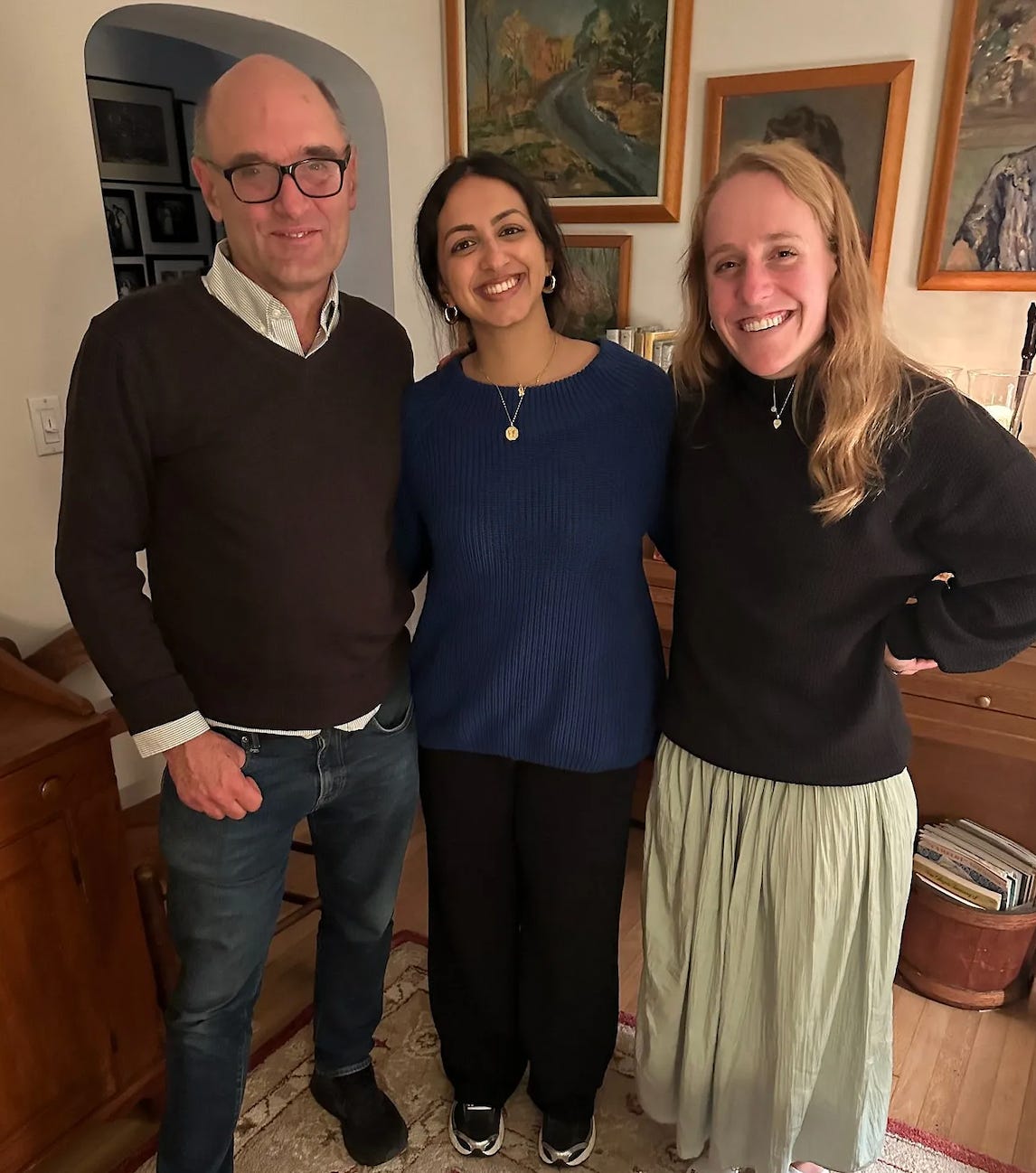
#1. Rob - Reading Our Expand Democracy Archive Gives Reasons for Hope
As we prepare for our ambition plans in 2026, Eveline, Nivea, and I are cataloging the pro-democracy ideas and actions featured in this newsletter, on our Democracy Lab podcast, and in more than a dozen virtual meetings we’ve held among election reformers and election officials. I took time to read our Expand Democracy 3 posts since our launch in March – collectively more than 68,000 words on 99 topics, with scores of timely links. As New Year’s Eve can be a long night, you could join me in reading them, fortified by your drinks of choice - or instead rely on my reflections on why my re-reading gives me hope in this dark time.
Our dark time is not specific to Donald Trump, even as his administration represents an existential threat to pluralism, the First Amendment, separation of powers, and the rule of law. On July 17, I wrote; ‘A guiding principle for the founders of Expand Democracy is that no one has all the answers for how best to make democracy successful in the 21st century, but it’s of fundamental importance to continually identify, vet, and catalyze action on promising pro-democracy ideas. When the collective rating of the health of democracy around the world has declined for 19 straight years, as determined by Freedom House, we clearly need new ways of thinking.”
We’ve done a lot this year to lift up that thinking and the actors seeking to turn ideas into new laws and practices. We covered structural changes that would make a huge difference, including the Fair Representation Act in Congress as a permanent remedy to gerrymandering, ranked choice voting as a universal ballot type, a national popular vote for president, checks on the power of big money in politics, universal voter registration, secure mobile voting, reforms to loosen the grip of primary electorates, filibuster reform, and Supreme Court term limits. But it will take scores of changes at all levels of government to earn and sustain trust of the American people -- and we never will be “done.” As Congressman Jamie Raskin likes to quote Alexis de Tocqueville, “democracy is either expanding, or it’s shrinking.”
My colleague Eveline Dowling, in one of her contributions, captured what’s needed well: “Restoring confidence in democratic processes is at the heart of Expand Democracy’s mission, promoting ongoing change across the spectrum of democratic practice. Citizens across the world - and certainly here at home, with traditionally optimistic Americans near the bottom of this international ranking - need systems that provide voters with genuine choices, enhance accountability, and ensure that leadership accurately reflects the diversity of the populace. Reforms such as the adoption of more equitable voting systems, transparent governance practices, enhanced civic education, and the promotion of inclusive representation can help restore public trust. Ultimately, trust is fostered when communities observe that their voices are not merely acknowledged but are actively influencing policy decisions.”
In that spirit, I’m intrigued with reform ideas we covered this year, including: how to add endorsements to nonpartisan and primary ballots; promote internal democracy within legislatures; scale the model of the Washington State voter guide; involve communities in participatory budgeting; pass state Voting Rights Acts; bring all high school students to state capitals for hands-on civic learning; extend voting rights to more teenagers; improve and expand initiative and referendum; promote nonpartisan election governance; enable citizen assemblies to offer policy solutions; make more voters count in presidential primaries; create level playing fields for women and people of color to run, serve and lead; and decrease the likelihood of political violence.
These hopeful ideas are only a start to the creativity and energy of literally millions of Americans engaged in making our democracy more vibrant, responsive, and participatory. With no quick fixes, we all can play our part. Millions of Americans are exercising First Amendment freedoms of assembly, speech, and association to resist government overreach. Countless parents and educators like my two daughters are helping to promote the critical thinking that is a cornerstone to democracy -- as aptly observed by author Jeffrey Scheuer in our newsletter that drew a Substack “high five” this week from author Junot Diaz: “So why are the liberal arts special? Because citizenship, as a multidimensional civic, economic, and cultural system, is essential to democracy, and liberal learning uniquely prepares students for citizenship in all three dimensions. It is not the only important mode of higher learning, but it’s the only one that directly affects our ability to sustain democratic communities. The liberal arts teach what is the very essence of citizenship: what the world is about, and that you are in the world.”
To expand democracy, we have to embrace both such long-term investments in communities and people and short-term actions to win change and resist movement toward autocracy. In 2026, we’ll continue to cast a wide net, including in a new Substack series where guest authors can make their case for their proposals. We’ll also strategically amplify a handful of particularly promising reform campaigns and strategies across the year and, when needed, explore how best to mobilize financial resources and strategic support for ideas needing a catalytic boost.
You’ll be able to read about it all here. Thanks to those of you who have found Expand Democracy, and a special thanks to those who have helped “found” our work with opening year donations and Substack subscriptions. Onto the end-of-year reflections of my remarkable colleagues!
#2. Eveline - The Dual Function of Academic Writing in Democratic Reform
This is excerpted from my essay published in the Fulcrum last week.
When I began publishing research on elections and representation, I always imagined the audience as primarily academic - political scientists, methodologists, perhaps a few practitioners who hunt for new data. But as my work with Expand Democracy deepens, I find myself reflecting on how scholarship shapes the public conversation and why academic writing is not necessarily a detour from democracy but can be a foundation for it.
The value of academic work in democracy reform is not new. Foundational texts in the field, such as Douglas Amy’s Real Choices, New Voices, Arend Lijphart’s Patterns of Democracy, or Jane Mansbridge’s work on representation, provided a reference point that activists, funders, journalists, and advocates could all cite and gave the movement a shared vocabulary, empirical grounding, and legitimacy.
Amy’s book, for example, became a canonical reference for proportional representation reformers. It brought analytic rigor and historical depth to a conversation that lacked both. Scholarship in this sense performs a dual function. On the one hand, it disciplines the imagination while simultaneously expanding it. It prevents democratic reform debates from becoming slogans while simultaneously supplying the intellectual framework for new institutional designs. This dual function of constraint and creativity is central to why academic writing remains indispensable to reform organizations.
How my research supports Expand Democracy’s mission:
Several of my recent projects address questions at the heart of today’s institutional reform debates.
1. Electoral systems and participation/turnout: My co-authored articles in Electoral Studies (2024) and Social Science Quarterly (2025) examine the relationship between ranked-choice voting and turnout across racial/ethnic groups. These studies draw on multi-year datasets and causal inference tools to answer a question that is often asserted in public debate but rarely rigorously tested: does RCV mobilize voters, depress participation, or do something more complex?
My other recent work for the American Bar Association “2025 report What We Know About Ranked-Choice Voting” reviewed decades of peer-reviewed scholarship on RCV and concluded that, while not a panacea, RCV “provides evidence … of clear benefits in representation, campaign quality, mobilization, and turnout.” This is the kind of evidence-based foundation that my own empirical analyses of turnout shifts and candidate representation seek to build on.
In a political environment where turnout disparities map onto structural inequalities, this research performs both the disciplining and generative functions described above. It closes the gap between rhetoric and reality while generating new questions about when, for whom, and under what conditions reforms improve participation.
2. Representation and political equality: My ongoing research on the descriptive and substantive representation of women, Latino, and Asian candidates under RCV situates local electoral reforms within larger debates about political equality and system responsiveness. These questions are central to both comparative political science and to practical reform efforts seeking to correct representational distortions.
3. Election governance and administrative capacity: As part of the Democracy Exchange Network and in my prior analysis for the Ranked Choice Voting Resource Center, I have contributed to a growing scholarly conversation about election governance and management. This field has historically lacked empirical grounding, but it is increasingly central to democratic stability. My RCV election management report (2024) and my emerging collaborations directly engage questions of institutional design and administrative realism. These analyses help Expand Democracy assess the feasibility of institutional reforms and identify areas where research reveals gaps between theoretical innovation and administrative capacity.
4. Political communication and polarization: My forthcoming article on the far-right podcast ecosystem in the Journal of Radio and Media (with David Dowling) and my book chapter on election fraud beliefs (in M. Ritter’s Rising Above Conspiracy: Understanding Elections, Election Administration, and Democracy in America and Abroad in the 2020s) draw on communication theory and political psychology to analyze how misinformation, identity, and media structure political attitudes. This work is foundational for an organization concerned with voter trust, legitimacy, polarization, and the public understanding of elections. It clarifies the constraints under which reform messaging operates and diagnoses the system-level challenges that undermine democratic participation.
The Relevance of Scholarship Generally to Expand Democracy’s Mission:
Expand Democracy’s mission is to strengthen democratic institutions by identifying promising reforms, assessing their viability, and building networks of practitioners, scholars, and policymakers. This orientation places academic knowledge at its crux because it provides analytic clarity. Reform debates often hinge on empirical claims about turnout, about candidate diversity, and about the consequences of electoral rules. Academic work disciplines these claims while allowing organizations like ours to separate empirical outcomes from assumptions.
In addition, scholarship strengthens institutional legitimacy. Funders, policymakers, journalists, and election officials are more likely to engage with reform proposals that have been shown to carry empirical weight. Double blind peer-reviewed publications signal rigor, credibility, and independence, qualities essential in a space that is politically contested.
Last but certainly not least, scholarship informs how we translate ideas for broader audiences. That’s why Expand Democracy has formed a Scholars Network to engage regularly with scholars as we consider and discuss new ideas and projects. This helps hone our popular writing, like Substack essays, the Democracy Lab podcast, op eds, policy briefs, etc., which are more effective when grounded in research. Academic work gives those narratives depth and precision. Conversely, writing for broader audiences makes scholarly insights actionable rather than insular.
At Expand Democracy, we’re trying to close the gap between research that sits on a shelf and ideas that change institutions. That means embracing scholarship (like my own and others) as a key tenet of our mission. And if Doug Amy’s work taught us anything, it’s that the ideas with the longest shelf life are the ones with strong intellectual foundations. My own publications are one small contribution to this larger ecosystem, but they reaffirm that, now more than ever, evidence is a democratic resource that needs to be utilized.
#3. Nivea - Reflections of a Pro-Democracy Movement Newbie
I joined the Expand Democracy team in September of this year unclear of what I was getting into, but thrilled to work alongside Rob and Eveline. This organization’s mission to uplift pro-democracy ideas across the country was enough to draw me in, yet I wondered how I might contribute as someone freshly post-grad, post-teaching abroad. Thankfully, Rob and Eveline quickly answered that question for me.
First came the Substack. Our team never fails to amaze me with the thoughtful and analytical pieces we produce. We’ve created an ecosystem that I find quite impressive, where the ideas that we deliberate within our Democracy Exchange Network (DEN) and Election Administration Group directly inform the subjects we feature in our weekly newsletter, the Expand Democracy 3. We are deeply committed to collaboration, and for me being new to the whole field, it’s been a great journey of meeting and learning who the key stakeholders are in a way that feels productive and meaningful.
I was honored to have Rob and Eveline give me the platform to spotlight my own work as well, with my inaugural Substack piece being a deep dive into my implementation of ranked choice voting in USC’s 2024-25 student government elections. I received immensely helpful feedback from those in and outside of Expand Democracy about this project, and I’m excited to continue to research RCV for many years to come.
All that said, I would be remiss if I didn’t highlight my claim to fame on our team: The Democracy Lab. Starting a podcast admittedly worried me at first, since I think we can all agree the podcasting sphere may be a tad oversaturated. Yet, I deeply resonated with Rob and Eveline’s vision to bring our discussions about pro-democracy policy out into our contemporary town square. I was also excited to apply my own experiences interning for the team behind Pod Save America and working through The Democracy Group’s Podcasting Fellowship to build a podcast from scratch.
The three of us knew that this podcast would add to, rather than dilute, the political conversation by making the democracy reform movement a commonplace movement to discuss. As Meredith Sumpter underscored in our most recent episode, it is our job as pro-democracy champions to remind people that addressing the issue of fair representation is a necessary pre-requisite to address the many other policy issues we’re bearing the brunt of. The way we choose our leaders directly determines the way our leaders act, and our mission with The Democracy Lab is to spread this idea while actively engaging our audience in the practice of being pro-democracy themselves.
I’m thrilled to have helped catalyze our podcast vision into action in less than four months, from brainstorming the name to identifying experts to interview to editing every episode. I can’t wait to see where The Democracy Lab and Expand Democracy goes next year, and I’m grateful to be along for the ride!
Click here to make your donation to Expand Democracy. Thank you!